Faces of Taiwanese Tea: Wu Zhenduo

Updated: May 11

Wu Zhenduo (吳振鐸) was born in Fu'an County, Fujian Province. He arrived in Taiwan in 1947 with a degree from Fujian Provincial College of Agriculture and a singular focus on the tea plant's genetic potential. At the time, Taiwan’s tea production relied on aging bushes and inconsistent processing. When he became the first director of the Tea Research and Extension Station (TRES) in 1968, he moved away from haphazard farming and toward a disciplined, data-driven approach to breeding.
The Story of Jin Xuan and Cui Yu
In tea science, a "cultivar" acts as a biological blueprint. Wu spent decades cross-breeding varieties to find a balance between hardy agricultural traits and exquisite aromatic compounds. His most famous successes—Tai Cha No. 12 and Tai Cha No. 13—changed the sensory landscape of the island.
Cultivar | Lineage | Primary Aromatic Markers | Technical Strength |
Tai Cha No. 12 (Jin Xuan, 金萱) - Golden Daylily | Ying Zhi Hong Xin × Tai Nong No. 8 | Natural lactones creating a "Nai Xiang" (milk fragrance). | Extremely vigorous; flourishes at varied elevations (300m–1600m). |
Tai Cha No. 13 (Cui Yu, 翠玉) - Green Jade | Ying Zhi Hong Xin × Tai Nong No. 29 | High levels of linalool, resulting in a wild lily/ginger flower bouquet. | High resistance to common tea pests and a crisp mouthfeel. |
Contrary to the fairytales of the "milky" note in a high-mountain Jin Xuan being added by "steaming the tea over milk" or other suspicious practices, it is actually a natural a byproduct of the plant's chemistry, not an additive. During the oxidation and wilting stages, the specific enzymes in No. 12 synthesize volatile oils that mimic dairy. Wu named these cultivars after his grandmother and mother, anchoring his scientific breakthroughs in personal history.
The Revival of Dong Ding Wulong
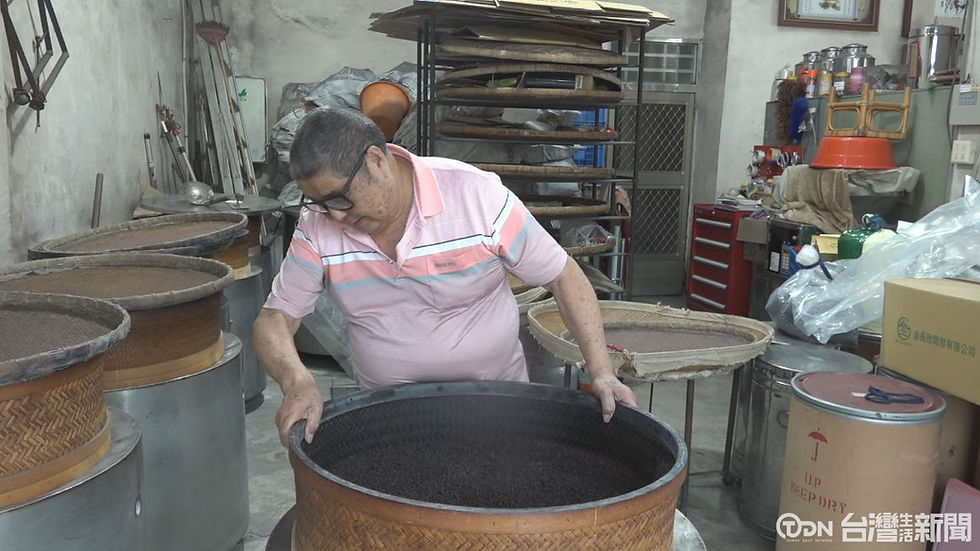
In the 1970s, the tea industry in the Lugu region of Nantou was stagnant. Farmers struggled with inconsistent quality and low market interest. Wu Zhenduo began a series of technical workshops, teaching farmers how to manage the "living fire" of charcoal roasting.
By refining the traditional ball-rolling and roasting methods, he helped standardize the profile of Dong Ding Wulong. He insisted on a specific "nutty" depth and a lingering Huigan (sweet aftertaste). To ensure this quality remained high, he established the rigorous sensory evaluation standards used in Taiwan’s famous tea competitions today.
The Four Virtues of the Leaf
Wu summarized his philosophy through four Traditional Chinese characters: 清、敬、怡、真 (Qing, Jing, Yi, Zhen).
清 (Qing - Purity): Maintaining the cleanliness of the leaf and the clarity of the tea liquor.
敬 (Jing - Respect): The mutual honor between the tea maker and the tea drinker.
怡 (Yi - Joy): The pursuit of pleasure in the daily ritual of brewing.
真 (Zhen - Truth): An honest representation of the tea's terroir and cultivar.
A Bridge Across the Strait
Wu Zhenduo’s career spanned a period of profound upheaval and transformation for the island. During his tenure, he navigated a shifting landscape of agricultural policies and economic hardships, consistently steering the industry toward new horizons. He dedicated over 60 years of his life to the leaf—learning, researching, and teaching with a tenacity that defined the era.
By the time he retired on August 1, 1984, he had served at the tea station for 37 consecutive years. This lifelong commitment earned him countless accolades across various sectors, but his true legacy lives on through the generations of specialists he nurtured. His contributions were so foundational that the industry bestowed upon him a title of deep reverence: the "Father of Taiwanese Tea." It is a distinction he earned through decades of sweat in the fields and precision in the laboratory.
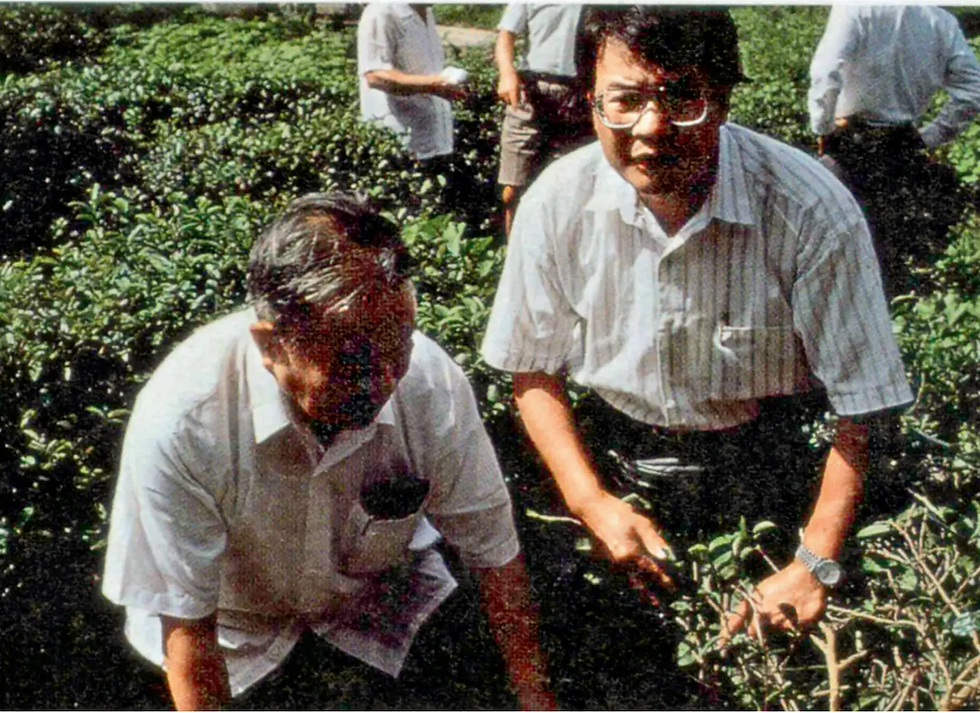
Even in his later years, Wu remained a scholarly traveler. In 1988, he returned to his roots in Fujian. He shared the agricultural advancements he developed in Taiwan with the tea masters of the mainland, believing that the science of the leaf was a shared heritage that surpassed political boundaries. He died in 2000, but his "children"—the millions of Jin Xuan and Cui Yu bushes—continue to define the flavor of Taiwanese tea for the rest of the world.
Experimenting with Wu’s Legacy
Sources
Taiwan Tea Research and Extension Station (TRES): Historical Leadership of Mr. Wu Zhenduo
National Culture Memory Base (Taiwan): Professor Wu Zhenduo’s Contributions to Agronomy
China Today (PressReader): The Father of Taiwan Tea: Wu Zhenduo
Liberty Times Health: Scientific Origins of Tai Cha No. 12 and No. 13
Ningde Vocational and Technical College (Fujian): The Life of Fu'an Native Wu Zhenduo
Taiwan Panorama: How Wu Zhenduo Modernized the Taiwan Tea Trade